“Over the last 70 years, the UK has seen a massive drop in housing availability in comparison to most other European countries, which tend to have more certain and efficient planning systems,” it states. “While the number of dwellings per person in Britain was 5% above the European average in 1955, by 2015 it had plummeted to at least 8% below.”
As a result, Centre for Cities concludes, the UK now has a backlog of 4.3 million homes relative to European neighbours.
Timber construction for faster, more sustainable UK homebuilding
The government recognises the urgency of the situation and has pledged measures to drive construction of 1.5 million new dwellings in five years.
But there’s an added challenge. Construction and buildings in use in the UK account for 25% of the country’s greenhouse gas emissions. So, besides urgently needing to build more homes, the building sector needs to build them more sustainably to shrink its carbon footprint and play its part in combating climate change. The Future Homes and Buildings Standard, which significantly tightens regulation on building energy performance and is due to come into force this year, gives them no choice.
How advanced timber systems improve housing delivery
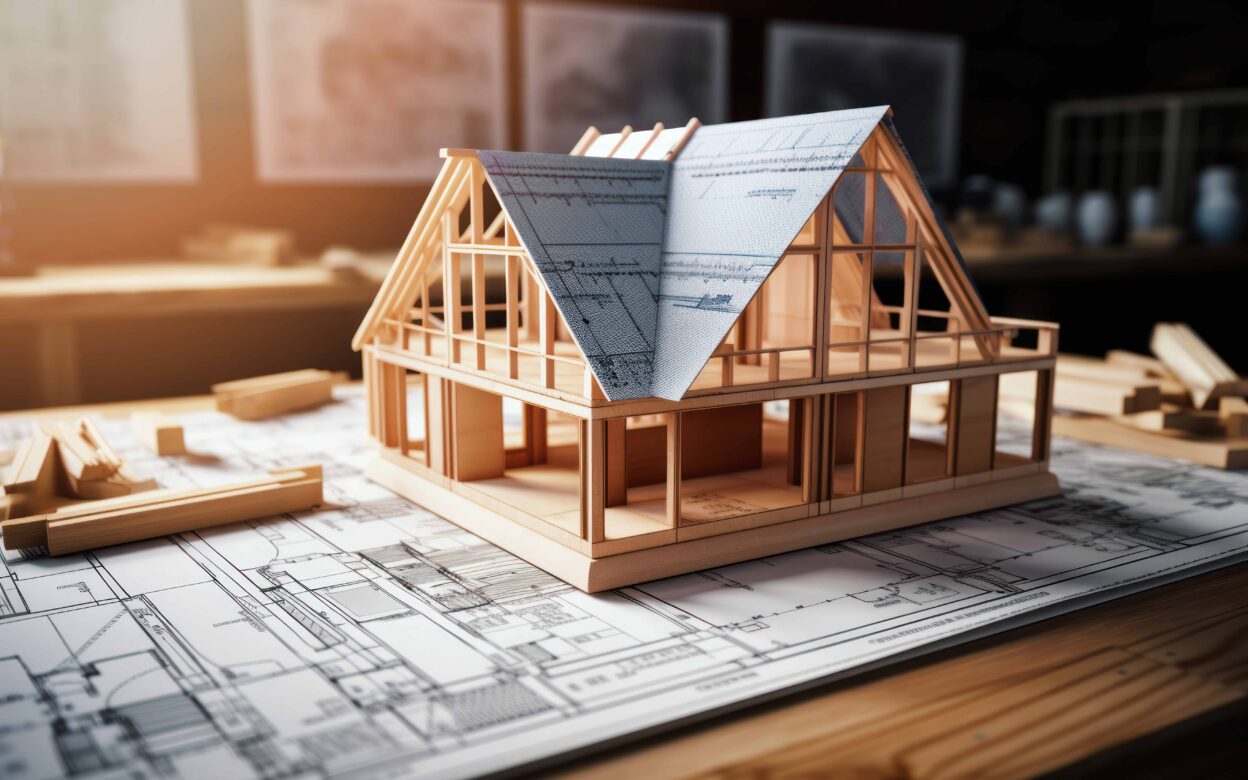
In a recent report, the Future Homes Hub, which supports implementation of the new standard, acknowledges there is no ‘silver bullet’ to meeting building’s carbon challenge. The consensus is that the same applies to resolving the housing shortage. But it is agreed by industry and government that a key part of the solution, in terms of both construction rates and environmental impact, is to build more in timber frame and other timber construction methods.
This necessitates a step change in UK timber construction capacity and further advances in timber frame productivity. But there is positive news here too with innovative, technically superior new products coming on the scene. These are all helping advance timber frame construction and timber housebuilders’ overall performance.
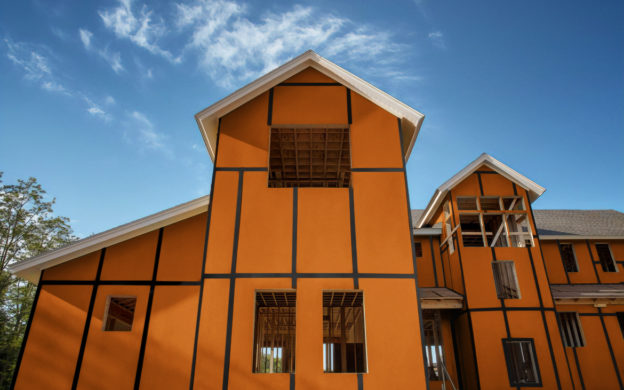
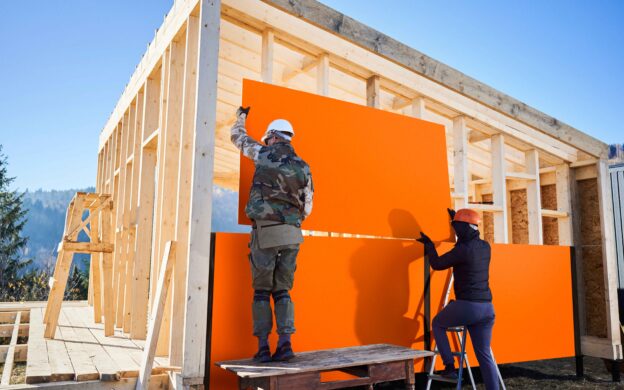
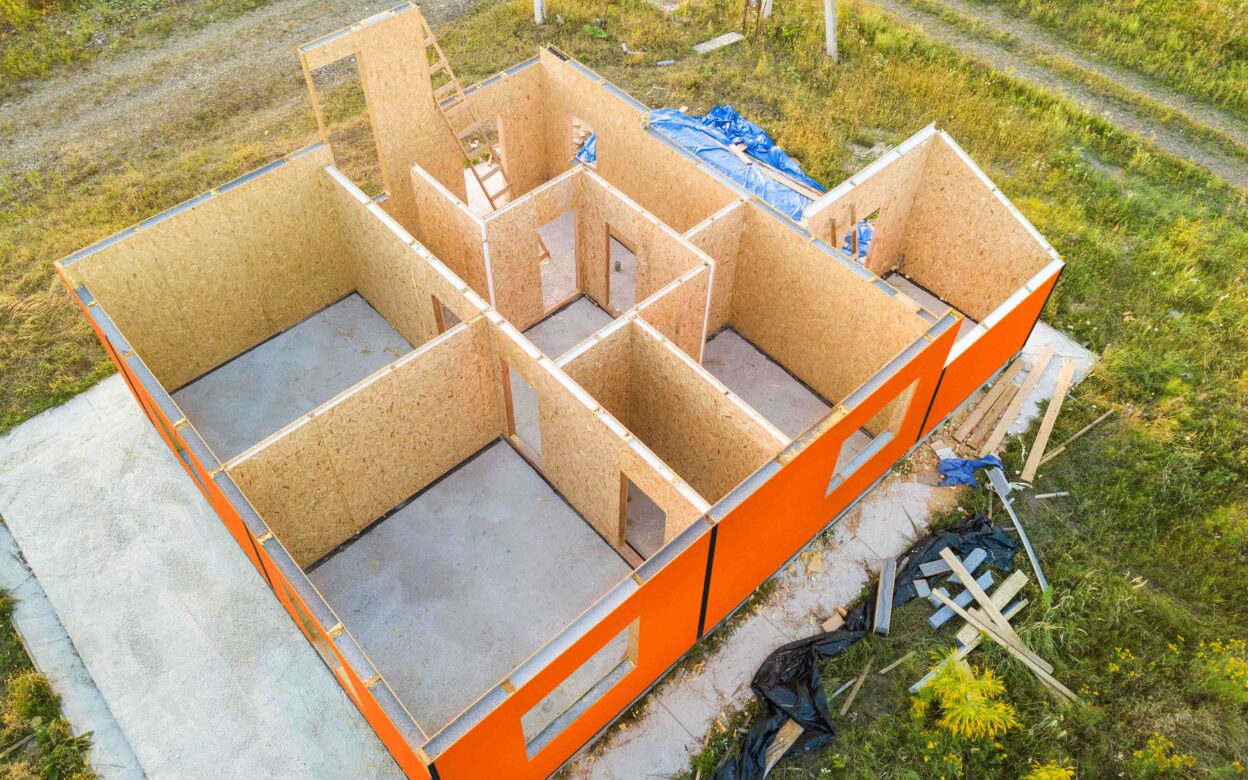
One such product now entering the UK and wider European market is Arctek® Dryshell™. This is an innovative factory-applied, weather resistant barrier for OSB and other wood-based panels. It’s designed to underpin timber construction, build quality and boost construction efficiency.
Timber in Construction Roadmap takes holistic approach
Government recognition of the important role timber construction has to play in meeting housing needs was demonstrated in its 2021 formation of the Timber in Construction Working Group. This includes government departments, academia and timber trade organisations. It was tasked with plotting the way ahead for timber building in a Timber in Construction Roadmap (TCR). The revised version of this came out in March 2025, with a recommended strategy that takes a holistic approach.
The UK, it contends, needs to increase its relatively low forest cover from 14.5% of land area today to 16.5% by 2050. This, says the roadmap, will in itself have environmental, well-being and economic benefits, generating green jobs and fostering innovation in forestry and wood processing sectors.
Critically, more woodland will also boost supply of home-grown raw material for UK timber construction, helping the building sector’s ‘transition to a net zero and a circular future’.
Why timber construction beats concrete and steel
Using more timber in construction, states the TCR, has multiple benefits. Notably these include its significantly lower environmental impact versus energy-intensive steel and concrete. Substituting these with timber, says the roadmap, can cut the embodied emissions – the CO2 emitted in the manufacture, maintenance and ultimate disposal of construction materials – in a building by 20% to 50%.
Of course, via photosynthesis, trees also sequester global warming CO2 from the atmosphere. It then stores it in timber where it’s locked in for the life of resulting wood products.
“At the individual building level, carbon storage is approximately 50% higher in timber framed homes than in masonry homes and can be up to 400% higher for larger buildings using engineered timber products,” states the Roadmap.
200,000 timber frame homes = 4m tonnes of carbon storage
A dramatic figure quoted by timber building firm QTF states that if 200,000 houses (around the number the UK built in 2024) were constructed in timber frame, they would store 4 million tonnes of carbon.
Due to its strength, weight and ease of processing, timber is also increasingly the material of choice for the UK’s growing offsite manufacturing sector. Here, housing elements and assemblies are prefabricated in a quality-controlled factory environment for much more rapid construction on site.
QTF says its timber frame homes require 20% fewer on-site labour days and ‘ensure a significantly faster construction process overall’. The TCR cites the example of a volumetric offsite timber frame system achieving a 50% faster build time than traditional construction methods. Moreover, factory prefabrication accounted for 90% of that.
Timber frame supports workforce and energy targets
Modern timber frame is also widely presented as helping deskill the build process when construction faces significant labour shortages. Timber is a natural insulator too, helping timber frame homes score well in terms of energy consumption.
“Timber offers exceptional energy efficiency performance, greatly reducing household emissions – a positive for both the environment and the pocket of the homeowner,” states the Structural Timber Association.
Timber frame’s energy performance also puts it in a good place to satisfy the Future Homes and Buildings Standard.
Opportunity to grow the timber frame industry at scale and speed
Currently, timber frame in England accounts for around 9% of new housing, which is low compared to other countries. In Scotland, by contrast, the figure is 92%. But, says the TCR, there is the opportunity in England to ‘unlock this industry at scale and at speed’. For this to happen, various steps from industry and measures from government are required.
These, says the TCR, include provision of more training, including apprenticeships, in timber construction. Greater focus on designing in timber in architectural and engineering courses is urged too. Also required is government and industry support for academic research into timber frame performance and innovative build methodologies. Further timber frame product development to support performance and help grow its output is also needed.
Importance of innovation in timber building
“We need to encourage innovation in building practices within the construction sector and promote methods and materials that have the potential to increase efficiency and productivity,” states the TCR.
This, says Arclin, is precisely where Arctek® Dryshell™ comes in, offering a match for modern timber frame requirements. Essentially, this is the right product at the right time.
The company has a long heritage of providing ground-breaking protective, performance enhancing products for timber-based panels. Arctek® Dryshell™ is a proprietary resin formula-based overlay for application under pressure and heat in OSB producers’ manufacturing plants.
Why older membrane solutions hold timber back
Traditionally, site-fixed polyethylene protective-breather membranes have been used to protect wood panels from the elements during timber frame construction. It also provides a vapour-control layer. However, these have inherent drawbacks. If applied onsite, fixing adds a time-consuming additional process to the build.
Conventional membranes can also snag and tear, including on route to site and during fixing and in high wind. They additionally require experience and expertise to apply in order to ensure precise overlaps at a time of building skills shortages. Any offcuts also need to be disposed of.
Arctek® Dryshell™: Next generation protection for timber frame
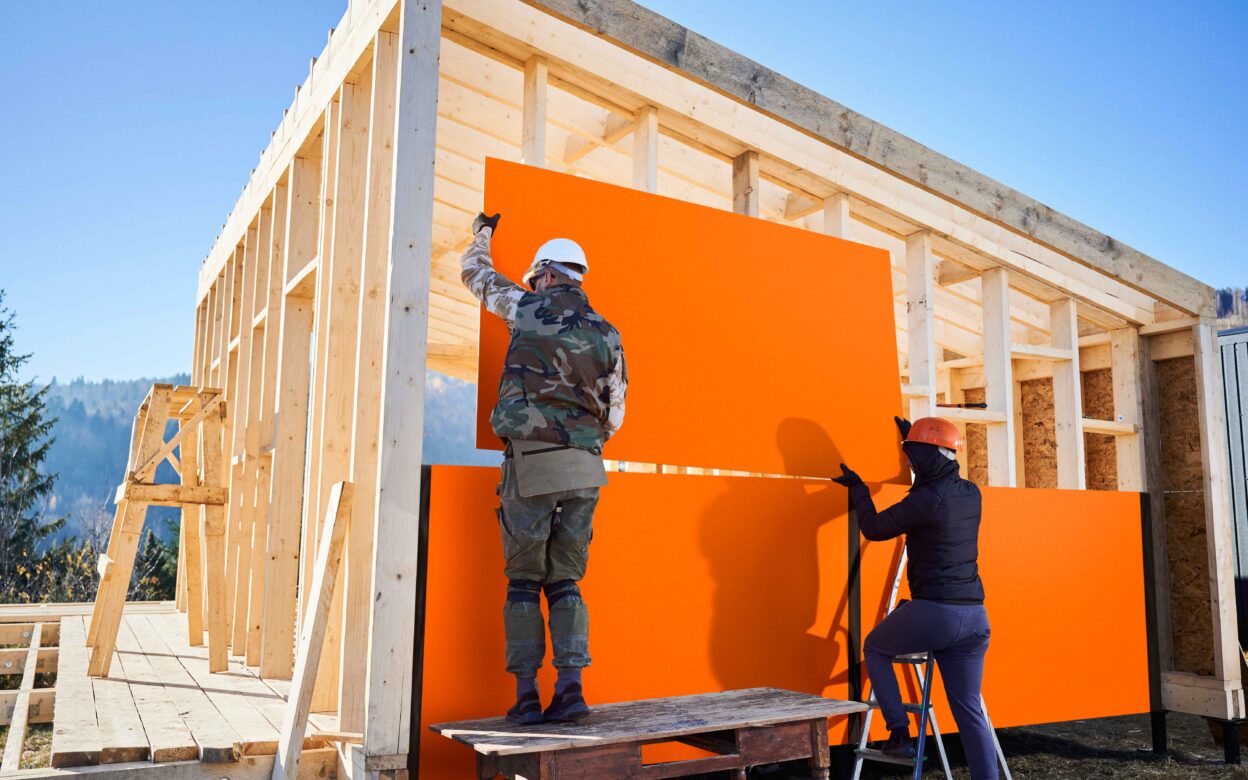
Arctek® Dryshell™ is billed as the post-membrane, next generation solution for panel protection. As it’s factory applied, it speeds up erection of a weather tight building envelope and is less dependent on-site skills. The ready-protected panels are put into place and joints simply tape sealed to achieve a high standard of air tightness.
Coverage of the panel with Arctek® Dryshell is uniform and consistent. The overlay is also vapour permeable, allowing any interstitial condensation in wall assemblies to escape to the exterior.
Making timber frame the go-to solution for UK housing
Timber frame is a prime solution for quick-build, quality, energy-efficient, low carbon homes and consequently for meeting the government’s five-year target for constructing 1.5 million new dwellings in the UK. Arctek® Dryshell™ makes that solution still more viable and complete, facilitating faster timber frame construction and enhancing the quality and performance of the finished home.
To find out more about how Arctek® Dryshell™ can benefit your timber framed house building projects, request a sample or contact us with an enquiry.