At the same time the UK government wants to deliver more homes, setting builders the target of hitting 300,000 additional dwellings per year in its current five-year term. That’s a near 50% increase on the number delivered in 2024-25.
Consequently, and perhaps as never before, the construction industry needs new strategies, systems and products to boost performance, quality and output. To meet the raft of new requirements imposed on it, it needs new solutions and weather resistant barriers will be one of the many solutions that will support the shift.
Future Homes and Buildings Standard combats emissions
An upcoming regulatory development for the building sector will be the introduction of the Future Homes and Buildings Standard (FHBS). This is framed to help the UK reduce emissions, of which construction and buildings in-use, account for 25-30%. It is expected to form part of wider strategies to meet the UK’s 2050 net-zero carbon goals.
If the introduction of the FHBS goes to plan, all new dwellings will need to meet the Future Homes and Buildings Standards from December 2027. Its expected headline requirement is that new build homes produce 75-80% less carbon emissions than those built to the 2013 Building Regulations’ baseline. This is being enacted through amendments to Part L, covering building energy performance and Part F on ventilation as well as Part O covering overheating.
Future Homes and Buildings Standard drives building fabric efficiency
Achieving the new standard will require better building fabric efficiency, with enhanced air tightness, thermal bridge reduction and higher R (heat resistance) values for walls, floors and roofs from improved insulation levels.
Low carbon heating and hot water systems, such as air and ground source heat pumps, will also be needed as gas boilers are expected to be phased out. To achieve the levels of energy efficiency it requires, the FHBS is also expected to drive the uptake of mechanical ventilation systems, which can deliver a healthy interior environment without compromising airtightness.
Builders and developers have already been turning increasingly to timber-based construction as a route to build more homes, increase productivity, while at the same time reduce their carbon footprint. The FHBS is expected to accelerate that trend.
Building in timber is not just 30% faster than masonry construction, it has a lower carbon factor to produce and process than energy intensive man-made materials such as steel and concrete. Moreover, timber building products lock in carbon sequestered by trees as they grow for their lifetime. Or as timber industry trade body Timber Development UK (TDUK) says ‘when you build with timber, you are building with carbon’.
Timber frame can deliver superior air tightness
Timber frame producers highlight that timber is also a natural insulant, helping to regulate indoor temperatures and reduce energy consumption for heating and cooling. Additionally, timber frame is billed as delivering superior airtightness. This is due to its use of precisely engineered components, which combined with its capacity for accommodating high levels of insulation, minimise air leakage.
FHBS expected to boost offsite construction
The FHBS is also expected to encourage offsite housing manufacture. Here building assemblies are prefabricated to high levels of precision and uniformity in quality and climate managed factories for rapid erection on site. Its advocates say it not only gives faster build times and higher performance homes, but it also deskills construction at a time of rising site skill shortages. Timber, in turn, is seen as a prime material for the offsite approach given its strength to weight ratio and relative ease of processing.
Landfill tax another push to timber frame
With government committed to ongoing increases in landfill tax, a further attraction of timber frame, and particularly offsite timber frame buildings, is that they generate less waste than other house construction approaches.
Recognising the all-round potential of wood-based construction, some of the UK’s leading builders have invested in offsite timber-frame factories. According to the Structural Timber Association, around 2,500 small to medium-sized builders are also ‘now looking seriously at timber for the first time’.
Speaking at a TDUK event, Professor Noble Francis of the Construction Products Association said new building regulations would continue to make timber an attractive technical option. “It’s not one driver alone,” he said. “It’s a combination of energy standards, labour shortages and the need for faster, more predictable build systems.”
Government Roadmap sets out timber building future
The government clearly recognises the potential of timber-based building. In 2021 it set up the public-private Timber in Construction Working Group and tasked it with drawing up a Roadmap for growing the sector. The latter was published in 2023. Strategies it advocates include improving data on timber and whole life carbon, promoting the safe, sustainable use of timber as a construction material and increasing sustainable timber supply.
Pros and cons of weather resistant barrier types
The roadmap also recommends promoting innovation and high performing timber construction systems. Weather resistant barriers perform vital roles in timber buildings. They protect wood building products from the elements on-site and can enhance airtightness. Vapour permeable variants also allow internally generated moisture to escape the building envelope.
Plastic based house wrap type weather resistant barriers
The most commonly used products are polyethylene or polypropylene house wraps. These are applied to the exterior of the envelope in the factory or on-site using staples or nails. They are relatively cheap. However, they can snag and tear during application, especially in adverse weather. To achieve the right overlapping and joint sealing also requires site skills and experience which are increasingly in short supply. Moreover, they add a process to timber frame erection, offsetting its inherent quick build benefits. They also result in waste offcuts.
Building paper weather resistant barriers
A long-established weather resistant barrier is building paper, which comprises kraft paper impregnated with asphalt. This delivers water resistance, but its weight can make it cumbersome. It is also less flexible than the plastic alternatives and, perhaps even more so than the latter, requires skill to fit. It can crack and tear during installation and over time can dry out and become brittle. It also lacks vapour permeability.
Peel and stick weather resistant barriers
Manufacturers say peel and stick, also known as self-adhered weather resistant barriers, represent a technical advance on house wrap membranes and building paper. Generally, an adhesive primer is applied to the timber frame envelope, the backing of the weather resistant barrier is then peeled off and the product fixed in place. These tend to be more expensive, but producers maintain they still only represent a small fraction of overall build cost. They do however also require experience to ensure there are no gaps where moisture could enter. This adds a process to the build and is best not applied in wet conditions. Moreover, they always require an adhesive primer used with OSB (Oriented Strand Board) because of its uneven surface.
Liquid-applied weather resistant barriers
Brush or spray applied liquid weather resistant barriers represent a further step up in technology and also price. They are claimed to give better water resistance and airtightness than plastic membranes and self-adhered products. But they too need skill to use effectively and achieve the right wet thickness, and they add to build time.
Thermally fused weather resistant barriers
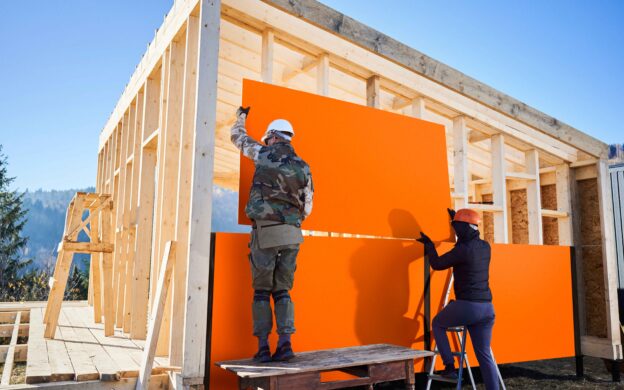
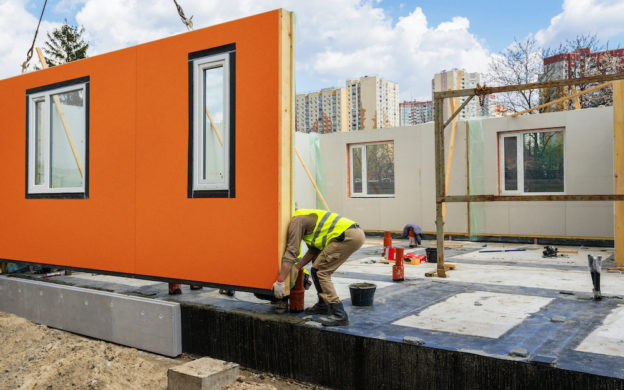

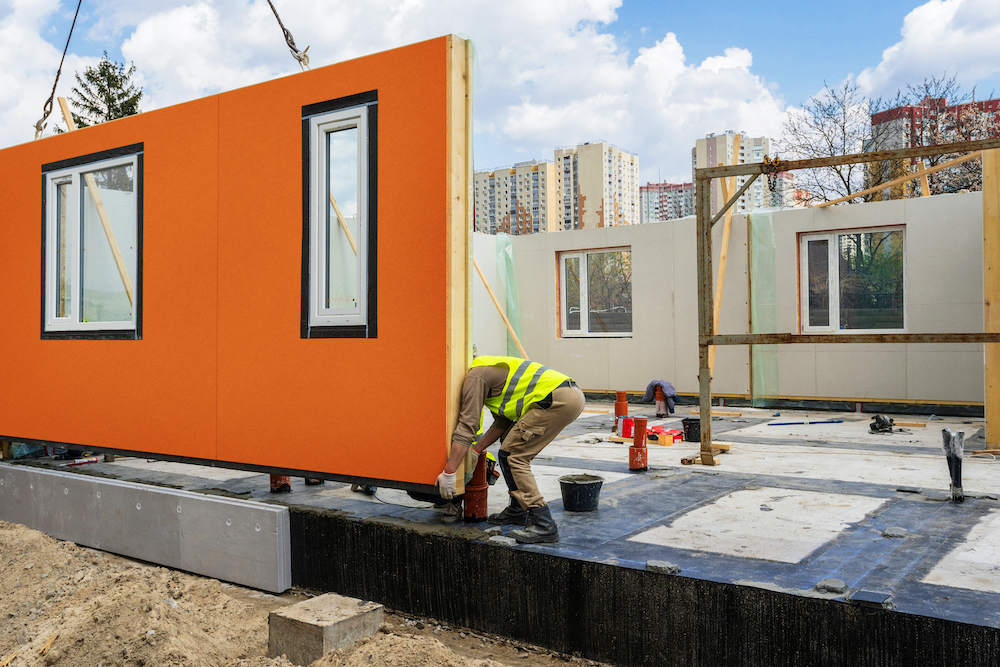
Thermally fused weather resistant barriers, unlike more conventional products, do not add a further stage in timber frame construction. They are a proprietary resin formula overlay, that is an integrated solution, applied to wood-based panels in the panel producer’s factory. This ensures uniform all-round protection coverage and consistent quality, with the wood panels protected when they get to site. Thermally fused weather resistant barriers are vapour permeable, preventing build-up of interstitial condensation in the envelope.
Deskilling the weather resistant barrier process
Instead of adding to construction time, thermally fused weather resistant barriers enhance the inherent quick-build benefits of timber frame. They also deskill the weather resistant barrier process, being applied under heat and pressure on automated lines in wood panel makers’ factories. That is a key and growing advantage in today’s UK construction industry. It is estimated that to satisfy housing demand in the UK, we need 250,000 construction workers by 2028. So labour-saving technologies, like thermally fused weather resistant barriers, are set to become ever more relevant.
Thermally fused weather resistant barriers benefitting timber frame housing
Arctek® Dryshell™ is a thermally fused weather resistant barrier that is relatively new to the UK and rest of Europe, but is based on a technology that’s well-established, tried and tested across the US. It’s particularly employed on OSB. With new regulation setting the bar ever higher for UK construction’s environmental and quality performance, it represents the way ahead here too in weather resistant barriers for timber building.
To find out more about how Arctek® Dryshell™ can support your future timber building projects, request a sample or enquire here.